Showing posts with label Tunnels. Show all posts

Thursday, September 15, 2022

Underground Narbonne

When France was part of the Roman Empire, Narbonne was a significant provincial capital. Unfortunately very little of the Roman history has survived, but today we explored one of the main archeological site in Narbonne with Roman origins. 


Not far from the apartment is the Galeries Souterrainses Romaines. This was, in Roman times a vast underground warehouse for storing goods. It consists of a series of connected arched tunnels and storage rooms. The main reason they have survived is that local people built houses on top of them and used the old Roman ruins under their houses as basement storage. Of course many were damaged and modified over the years, but enough survived to enable the town to claim them and restore them to a degree. It is now a protected historical site and open to the public. 


As you descend into the underground tunnels you immediately understand the

Going Down

"why" of this construction. It was a muggy 32°C outside on the day we visited, and climbing down the stairs you immediately felt the temperature drop. The cool underground storage rooms would have been perfect for storage of anything that might spoil in the HOT southern France weather. As you explored the tunnels, rooms were set up with examples of things stored here; wine, grain, vegetables and even fish were kept fresher in the cool underground areas. 


In its restored condition, there is an impressively large labyrinth of tunnels and rooms, but apparently it was much bigger originally. Many areas have collapsed and have not yet been restored or rebuilt. 


Exploring the Galleries Souterrainses Romaines was a fascinating and informative way to spend part of a day here in Narbonne and getting out of the heat into the cool underground rooms was a relief for those in our party who do not properly appreciate the heat here in the south of France.


No wine in any . . . .


Tuesday, April 12, 2022

Climbing More Stairs

Stairs. . . .
Lately Regis and I do not do stairs very well. I blame my mother, as I have inherited some of her arthritis and my knees and hip do not like stairs. COVID delays have only allowed Regis to get one cataract fixed so far, so her vision is not the best and with one fixed eye and one bad one, her depth perception is way off, particularly at ground level, so she does not see sidewalk cracks or stairs very clearly. The condo here is on six levels, and we are constantly going up or down stairs to do anything, so stairs are unavoidable. 


You would think we would know better than to go visit an attraction with lots of stairs, but no, we decided to visit Casa Loma castle here in Toronto yesterday. 

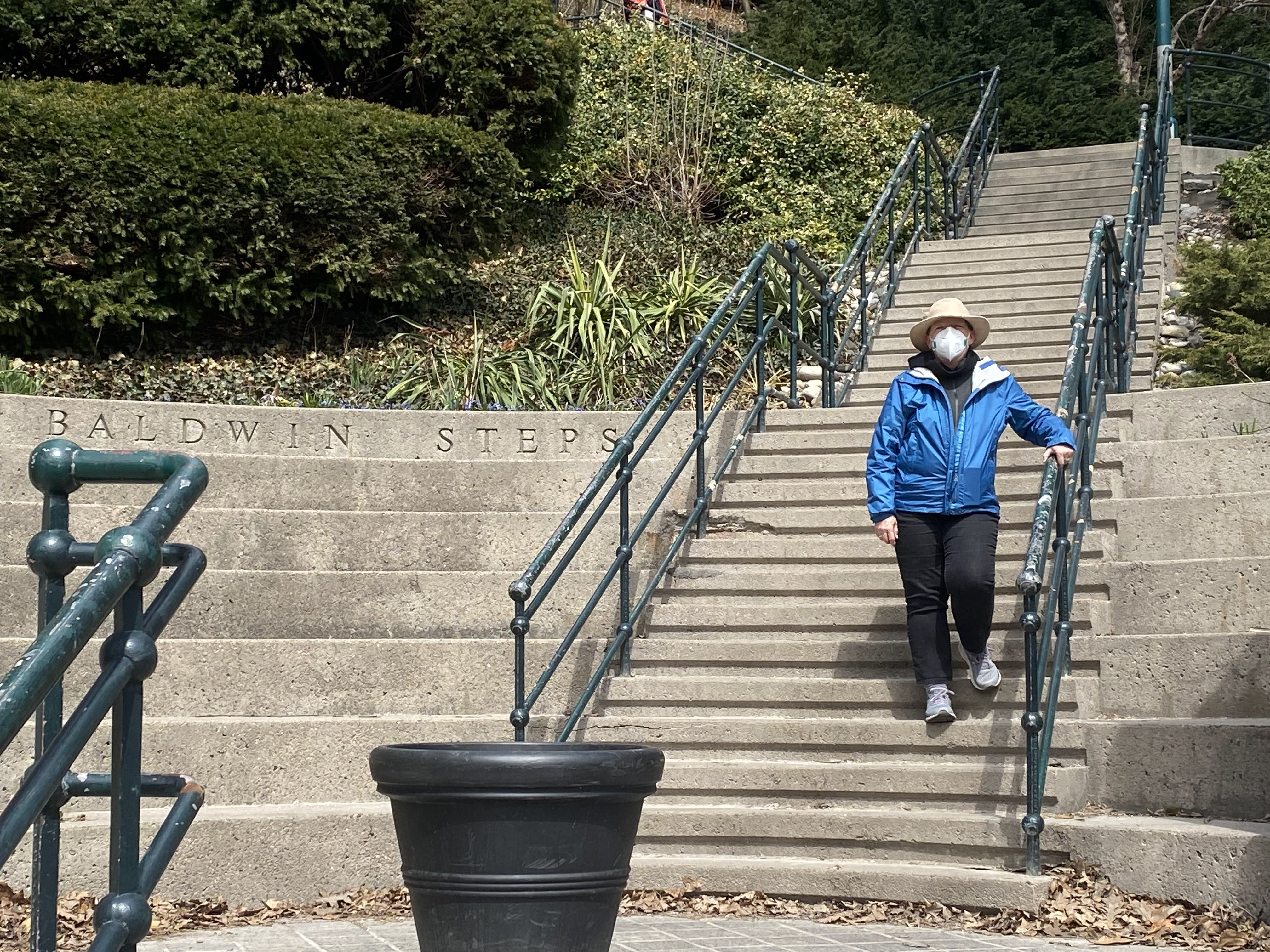
Baldwin Steps . . 110 of them


In order to get to the castle, you can drive, but we decided to take public transit which we enjoy using here in the big city. Out of the subway station we walked up Spadina Rd., and ended up at the Baldwin Steps. As the name implies . . . . more steps, 110 in fact leading up the hill to the castle. 


And the castle itself . . . . . wide elegant central stairways, but also narrow wooden stairs, secret passageways with even narrower stairs, and rickety spiral stairs to climb into the towers. Then the worst of all, an underground tunnel with uneven surface and dim lighting and images projecting onto the walls and floor. But with a lot of, “watch out, one step down.”, “three steps up”, or “careful, narrow stairs!”, we made it through and actually enjoyed the visit to Casa Loma very much. 

Casa Loma


Casa Loma really is a spectacular attraction. Built in 1911 by financier Sir Henry Pellatt for 3.5 million dollars, it was the largest private residence in Canada. It sits on top of a hill, providing a lovely view over the city of Toronto. The actual design envisioned by Pellatt was never finished completely. For example, he planned to have three bowling alleys in the basement but only one was finished, and the third floor was never completed while he lived there. Unfortunately, the castle cost so much to build and with the financial troubles of the great depression Pellatt only lived in the house for 10 years before he had to give it up. It is currently owned by the city of Toronto and is leased to an entertainment company and used at a setting for movies. 


And we did climb the spiral stairs to the top of the tower to enjoy the views over the city. A great adventure in Toronto. 

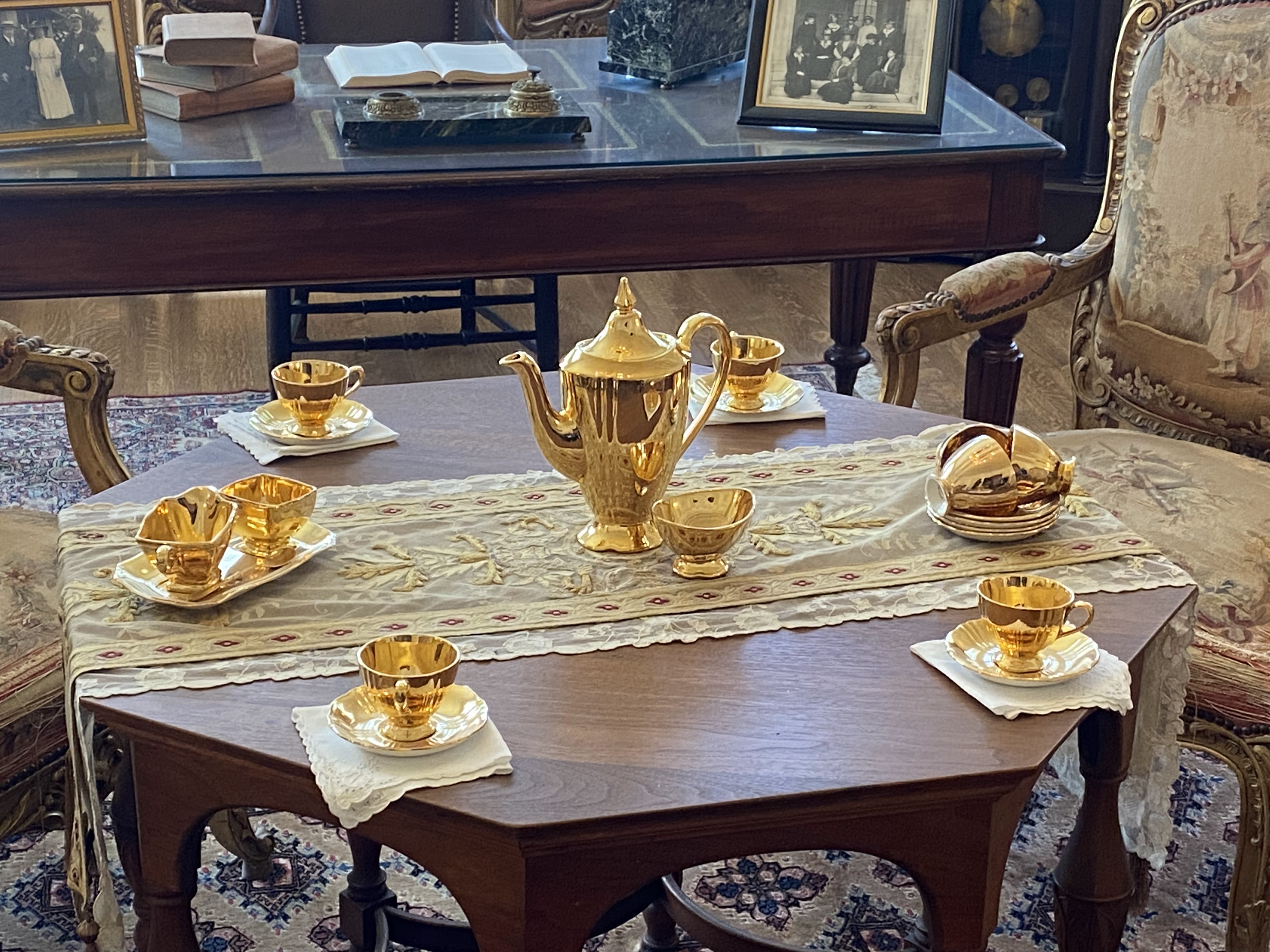
Anyone for Tea?

An old wreck parked at the entrance

Tunnel to the Hunting Lodge & Garage

View from the tower

A well stocked wine cellar

Antique Shooting Brake

One of the 50 phones in Casa Loma originally

A rather elaborate bed

Indoor plumbing in "My Lady's bathroom"

Not sure what this was all about?


Saturday, October 6, 2018

Under Toronto


PATH "direction signs"
The first year I retired, I went with Regis to Montreal while she was attending a conference, and I discovered the “underground city”, which was 33 km of tunnels connecting buildings in downtown Montreal. The tunnels allow people to move around the city under the cold and snow of the Quebec winters. With time on my hands, I really enjoyed exploring this interesting underground part of the city. I even found a nice linen suit I had been looking for in a little shop in one of the tunnels.

Where is everyone?
Years later while picking up a cruise in Houston, I discovered they also had a “tunnel” system. In Texas of course the goal is to keep people out of the summer heat rather than the cold, and their tunnel system is just under 10 Km long, but it is very well organized, and new building in the area are required to connect to the system. I wrote a Tripadvisor review of this attraction after walking most of it one afternoon, entitling it “How not to see Houston”, and for some reason this title attracted hundreds of readers, the most of any of my reviews by a huge margin.

At least someone is using PATH
On this trip to Toronto I explored Toronto's tunnel system. It is called PATH, and is over 30 km long and contains over 4,000,000 sq ft of retail space – the largest underground shopping complex in the world. The bulk of the PATH system is under the “Financial District”, so its primary use is during business hours, and on a damp rainy Saturday when we decided to explore the PATH not only were the tunnels mostly deserted, nothing much was open. You could follow the PATHs, but most stores and restaurants were locked up
tight. Apparently over 200,000 people use the tunnels most days, but we were often completely alone.

The PATH, is often very difficult to follow. You are underground, so have no reference points to follow and the tunnels turn and twist through buildings, subway stations and food courts so it is easy to get turned in the wrong direction. The city has developed a system of directions and signage to help explorers find their way around, but we discovered that although the signs help when you can find them, some areas do not have any signs. Union Station for example which is confusing anyway contains minimal signage. They use a system of coloured arrows to show which direction you are headed, Blue - North, Yellow – East, Red – South, and Orange – West. You would think this would help, but we discovered one sign that had the colours and the directions mixed up and we headed in the wrong direction.

It was a good way to spend a damp morning, and we had
Nothing open down here today.

pretty well fulfilled our “Toronto To-Do” list, and I will certainly be coming back to see what it is like during a business day.

This sign is completely WRONG!


-->

Tuesday, September 26, 2017

Narrowboat Day Two


Walking the Aqueduct
This was the second day on the Narrowboat, and we went from England into Wales. We spent the night outside of a town called Chirk, and went to Llangollen. This was a particularly challenging section of the canal with two tunnels, two aquaducts, and two sections of single boat width canal. Only one bridge and no locks, but still plenty to keep us busy.

The canal we navigated today starts at Llangollen, and so all the water for the canal comes from here. This means that unlike most of the canals, there is current which complicates things at times. When the canals are narrow, the current will move the boat more than normal.
Underground in a Boat

For the uninitiated, an aqueduct is a bridge that allows the canal to cross a valley. The biggest, the Pontcysyllte Aqueduct, was built over 200 years ago with stone arches supporting the 125 ft. iron water channel carrying the canal 127 feet over a river valley. You come around a corner, the canal narrows, and you are suddenly floating in a narrow channel of water over 100 feet in the air. Although you know it is a bridge, and there is a walkway and rail on one side, on the other there is nothing. You actually have to peer over the side of the boat to see that you are on a bridge. I was driving the boat, but the crew was snapping photos and the folk walking across the bridge were snapping holiday snaps of us. I expect to see us on Youtube anytime now . . .
Traffic Jam! Bill got me through . . .

We navigated two tunnels, the longest 191 yards long, under a hill. These tunnels are arched brick lined structures barely wider than the boat. There are no lights but the boat has a headlight. Although I have never piloted tunnels, I have been through a few and knew what to expect as well as the principles necessary to get the boat through. Unfortunately the boat ahead of us did not really know what she was doing and went too slowly and ended up bouncing off the walls all the way. Unfortunately this along with the current flowing through the narrow passage made it difficult. If you maintain a certain speed you can get through more smoothly, but even our slightly claustrophobic crew member made it through, although I think I heard a sign of relief as we exited into the daylight at the other end.

Travel Gnome on the Aqueduct


As well there was about 700 yards of single boat width canal where the canal was cut from a steep rock hillside. Now a narrow canal is not really that hard, but this section twisted and turned making some tight turns that our 70 foot long boat could barely get around. These narrow sections require some planning, because you have to let crew ashore to go ahead and check for oncoming boats, and to stop any boats coming into the section while you are navigating it, because there is no passing room and it is almost impossible to back up.

It was a busy day, and mooring outside the town of Llangollen, I was happy to relax with a nice glass of wine as dinner was prepared from in the galley. 

Note photo four by Shelley Glover

Saturday, September 26, 2015

Chasing Swans


A swan family on the canal
As you cruise through the canals of England, it is common to run into families of swans. They live all over the canals, and are completely at home there. You can be gliding along through the country, or gently sliding between brick walls in cities and towns, and a group of swans will come out to greet your boat. They obviously get fed by people in boats and when they see boats coming along the canals, they come out to see if food is offered.

The swans are not afraid of the boats, they swim right towards them and easily swerve out of the way if they get too close. They look elegant and regal, but they are not friendly; reach down towards them and they will bite.

After two weeks on the canals, you get pretty used to seeing swans, and although they are
Swans are everywhere
pretty special in many places, they are common on the canals. We had a bit of a different encounter with swans on our last day with the boat.

We went down on the Anderton Boat Lift, then came back up and decided to spent the rest of the afternoon cruising further up the canal. There was another tunnel we could do; not as long as the Harecastle Tunnel, but an experience worth exploring. This tunnel was only 500 meters long, so you could peer in and see the other end, and know if another boat was coming through the other way.

After stopping for lunch at a lovely mooring spot after the tunnel, we turned around to come back to Anderton through the tunnel the other way. I again looked into the tunnel and signaling Bill that all was clear, and we proceeded through. About a third of the way through I realized that there was something else in the tunnel with us; I could see the heads of swans swimming well ahead of us. The family of swans we had seen on the canal earlier was swimming through the tunnel. This was a mother, father and four young swans. Now this time of year the young swans are still grey, but are almost full-grown and as big as their
parents.

As we approached half way I realized we were going to catch the swans before the end of the tunnel. Sitting in the front of the boat, I could see the swans clearer than Bill who was driving the boat so I told him to slow down. Even at a slower speed we still were gaining on the family of swans. Bill slowed a bit more but was concerned about loosing the ability to steer the boat; we had been warned that going too slow would cause you to hit the sides of he tunnel.

The swans realized that this was not a good situation. They wanted to stay in front of the boat, because falling beside the boat they could get crushed between the walls and the boat. They frantically tried to speed up and were able to pull ahead for a while, but tired and we caught them again. Bill tried to inch to one side and one of the young swans fell beside the boat on the wider side. The mother was desperately herding the young ones to the safer side while keeping herself between the boat and the family, while the father led the way and pushed ahead encouraging the family to greater speed.
 
Finally as the end of the tunnel came into range, Bill slowed a bit more and the swans put forth another final burst of speed, finally pulling out of the tunnel inches ahead of us. Even the one that had fallen behind was able surge forward into the sunshine. A happy ending for all.

Thursday, December 11, 2014

Under Houston

-->
Under Houston
The first year I retired, I accompanied Regis on a “Business” trip to Montreal, and I discovered the lengthy underground tunnel system there. In Montreal, I can see the benefit, with four feet of snow and -20 C temperatures, so I was surprised to hear that Houston, Texas also boasts a tunnel system connecting most of their downtown buildings and attractions. Since our French Canadian friends must want to avoid the cold, I have to assume the Texans are using the tunnels to avoid the 35+ temperatures in the summer.

A walk up to the next block from our hotel took us to a building with access to the over 6 miles (Montreal boasts over 20 miles) of tunnels beneath Houston. An escalator ride down one level put us in the tunnel system.

This is a well-organized and well-designed system, with maps and clear directions. We were able to find our way to one end and then back underground to within a block of the pub where I heard a cold beer calling me for lunch.
Looking up at Houston

Most of the “tunnels” are simply walkways running under the streets connecting buildings, but there are also some sections that are relatively long. Most look like they were designed into the plans for the buildings and contain many restaurants and shops along the way, and all except the last section we explored were purpose built “Tunnels” rather than just opening and connecting basement hallways as much of Montreal is, and most are elegantly finished in tiles and brightly lit with built in lighting.

These tunnels are very well used and I was very rarely able to get photos without people in them. We spent the afternoon exploring this intriguing transportation option in Houston, and although you miss the blue sky and the 20+ weather of Houston in December, I can see the attraction in escaping the heat of August.

And it did lead me nicely back to that cold beer I had calling me from across Houston . . . . .